Published: 9 Oct 2017
Lachlan McBride was the youngest of triplet boys and the youngest of a family of seven, born to Jock and Martha McBride. He was tall and strong while at almost twenty, a most handsome youth but that wasn’t always so. Lachlan was born undersize and for the first few moths of his then feeble life, was at death’s door and except for the continuous care and love from his mother would not have reached his first birthday anniversary.
To his mother he was known as Lockie, to his father it was simply Boy, while most others called him Runt, a name he grew to wear as a badge of pride. At its use he would flex a muscle, smiling he would agree, “That’s right mate the Runt and don’t you forget it,” being issued without the slightest display of malice towards its utterance.
Jock McBride had brought his family north from a small holding in the Gympie Valley in the southern part of the colony known as Queensland, to the developing sugar cane belt along the northern coast after the birth of his first, a girl who he named Mary in honour of his mother, while disappointed his first was not a son to carry on his family name he believed he had time and there would be others.
Once established in the tropical region he soon prospered, soon becoming an important figure in the area some distance north of the village of Tully, while with hard work and a measure of graft and enforced influence, had increased his holding, establishing the largest property anywhere between the quickly developing towns of Cairns and Townsville.
Back in the south McBride had no chance for prestige or advancement of his social standing because of his family’s flimsy but never the less proven, connection with James McPherson, a Bushranger better known as The Wild Scotsman. This relationship was so diluted that under normal circumstances one would not consider the connection as family but the stain was there and although it was never suggested outwardly, whenever Jock McBride attempted to better himself or become part of the Community he would be ostracised, amplifying his already abrasive attitude.
Within a year the birth of a second daughter Sarah was blessed upon the McBride family, which although filling Jock McBride with an equal measure of pride as did his first born Mary, still did not satisfy his need for a male heir. Yet he was young and Martha his wife was obviously capable, so he believed a son would eventually be blessed upon their union.
This did eventuated with the birth of twin boys, William and Cameron and then at the moment Jock McBride believed his production was spent, he was blessed with a set of triplet boys, Robert the elder, Daniel in the middle and of course Lachlan the Runt and although now blessed with four healthy sons McBride’s disappointment in Lachlan’s weakness gave latitude to self speculation that the failure of the child reflected some failure to the potency of the father.
Although Lachlan grew into the strongest and most handsome of his children, it didn’t sway the old man to favour the boy but to Martha McBride young Lockie was her pride and her love installed a high degree of tolerance and humanity into the lad, which he carried through out his years, along with his mother’s respect and zest for life. Lachlan was also blessed with a forgiving nature, realising from an early age nothing was to be gained by taking umbrage to name calling or bullying.
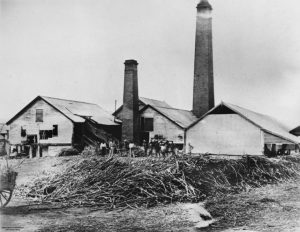
The McBride holdings were some distance north of the developing township of Tully and towards the coast, where skirted by his cane fields a small settlement had developed and on passing its hundredth resident, was deeded the name of McBride’s Point in his honour. An accolade bestowed on the village at the suggestion of McBride, while dedicating himself as the unofficial Mayor to the community. A title that was gladly given as he owned the very land the village stood upon, while the man set about selling house blocks to the highest bidder, then supplying the lumber through his mill to erect their humble dwellings, again at inflated prices.
McBride wasn’t considered to be a evil man, if you excluded self-indulgence, greed and indifference from the equation, nor for the times was he considered corrupt but was quick to take advantage of any situation without sentiment and with the north’s lack of law, he freely bent what little there was to his benefit, while seldom casting his concern towards the plight of others, unless he could glean some personal advantage from some future transaction.
As for the children of Jock McBride, the girls he considered to be his wife’s responsibility, while the boys – except for Lachlan, were his to develop into mirrored prodigy of himself to advance his empire, with William as his preference, establishing within the lad the necessary deviances to become his heir.
By the time Lachlan had matured the father had formed an adverse opinion of the lad and pride along with dogma would not sway his position. This indifferent attitude was extended to all branches of his relatives and if by chance any member from either branch of the McBride family occasioned correspondence or surprised by a visit, Jock would give the required measure of curtesy then retire to his private rooms until the unwelcome ‘tic’ had gone. He had even on one occasion order his wife’s cousin from his door, when the unfortunate fellow begged lodgings for a matter of days while waiting for the Cairns packet ship.
As for Lachlan he advanced through his childhood with three varied influences. There was the warmth of his mother’s love, the bitterness of his father’s disappointment and finally the cruel treatment delivered from his brothers. Firstly it came from the twins then as time progressed and they found other interests, the mantle of torment was cast by the older triplets. Such treatment was mostly overlooked by the father who called it horse play, declaring it would help strengthen the lad. That it did and because of his forgiving character inherited from his mother it did not scar his character. He simply shrugged his shoulders and got on with life, all the while making humour of their torment, while building character and strength of body.
Eventually he contain their adversary by becoming bigger, stronger smarter then they were.
On the surface Jock McBride did not appear to be a deeply religious man but being derived from old Scottish stock, was reeking of Calvinistic pride and austerity. While his wife Martha was descent from English convict stock, uplifted from the London gutters to prison hulks by draconian laws only to be transported for attempting to survive the plague of poverty. A fact that Jock never let her forget and used as a book mark to her responsibility towards his needs but never allowed it to be aired in public and like the man’s relationship to the so named, Wild Scotsman, Martha’s association with crime and convict was also somewhat faint.
Martha herself was not convicted of any crime other than being the grand daughter of a woman who stole food to survive, her grand father hanged for stealing ten pound worth of clothing to dress his children, while Martha’s mother was born on the high seas, at a non specific distance between Durbin in Cape Province South Africa and Hobart in Van Diemen’s Land during her mother’s transportation.
Because of his previous ostracization McBride found it necessary to have the largest house, most land the best crops, yet when it came to enjoying his bounty his was only thrift. There was always enough food on his table and fashion on his back but the family made do. His sons wore hand downs, Martha possessed her Sunday best to appear the part at church and his daughters marred as soon as it became possible, to husbands of McBride’s choosing, therefore transferring their fiscal responsibility to another, while using their husband’s as lowly paid farm hands when ever it was possible.
Often Jock would look upon his brood with increasing pride, especially the twins. They were his future hope. Their forcefulness and demands were a reflection on his desire for wealth and dogmatic need for respect, forgiving them for the treatment they cast down along the line of birth until ending with Lachlan. McBride also look upon Daniel and Robert with almost equal pride as he did the twins, with their matching long black hair and bright green eyes and slender body lines but it was with Lachlan where this pride became diluted. The father didn’t out-rightly reject the boy, nor did he outcast him but the disappointment was always apparent, hovering just above his need to include him as one of his clan.
Lockie was a throw-back into Martha’s ascendance and not remotely similar to his triplet brothers, nor did he in any way resemble the twins. In his youth Lockie was a weed, crowned with honey-red hair, to somewhat match that of his mother, while his eyes were oceans of blue, thus from the birth of the triplets McBride had suspicion towards his wife’s fidelity.
There had been a travelling salesman with red hair – well leaning towards dark ginger to be more accurate and although the old man should have known better, he suspected that like a litter of puppies, it was possible his litter had more than one sire and his bloodline had been polluted by that red haired cuckoo.
These suspicions had encouraged McBride to enquire further but at every attempt to ensure his claim, he was assured this could not be the case. If he were born the last of a set of triplicates, how could be the product of another?
Some time before the triplets conception, Martha had found comfort in the Salesman’s humour and favoured him with copious amounts of tea, sandwiches and cake whenever he chanced to visit, bringing his cooking pots and bolts of cloth, tea and sugar and Sunday best dresses, assuring, with a cheeky grin, they were the latest and finest fashion worn by the good women in Pitt Street or Bourke Street in those far southern cities.
There was laughter in the Salesman’s voice and a merry twinkle in his green eyes but not once had the good woman’s thoughts turn to infidelity. Nor would she, with all her husband’s faults, his miscreant behaviour she honoured her commitment, even when he ignored Martha’s very existence and made demands as he would from a bonded servant.
It was not only social correctness that controlled Martha’s attitude but her honest character. As for the salesman with the dark ginger hair, one week leading towards that final Christmas visit, McBride had met the happy traveller at the gate and ordered him to travel on and never come his way again.
Jock McBride had not challenged his wife with his suspicions but from the day of the triplet’s birth he become cold towards her, withdrawing from the marital bed, issuing declaration he was far too old for more children, while spending suspicious time visiting McBride’s Point and the Aboriginal Settlement at the northern extent of his property.
Her husband’s neglect suited Martha as she was a solitary woman, yet he was never physically violent towards her, preferring to rebuke verbally or with long periods of silence and absence. Thus Martha secretly cherished his absence, drawing her inspiration and peace of mind from her children and as long as she didn’t attempt to influence his boys, especially the twins, it suited the old man but she did supply basic education in the three R’s although mathematics was her weakness.
Lachlan had, as the rest of the McBride clan been educated at home by Martha but with the opening of a school in the town the triplets were enrolled for their final two years, more to skill the boys socially and educate them in mathematics, a subject in which Martha found a measure of difficulty but McBride believed to be imperative if they were to help run his ever developing estate.
As for the twins, William and Cameron, being older were not of age at the foundation of the school, therefore had to be content with Martha’s tutoring. With William being so was fine but Cameron appeared to be somewhat difficult to teach, taking on his mother’s characteristics of preferring his own company and subserviency, becoming from an early age William’s shadow, obedient to a fault towards his brother’s whims.
The school’s sole teacher Ralph Williams was a stern quiet man in his middle years, who whistled each letter S as he spoke, while habitually smoking his foul smelling cigarettes incessantly throughout the school day, giving the single class room a haze and the rank scent of cheap tobacco.
Williams wasn’t a pleasant man at the best of time, inclined to become somewhat familiar and suggestive towards the boys in his care and although there was never any known advancement to his intimations, his eyes did travel to those private parts below the waist line somewhat more often than one would appreciate.
The man’s tall, lean stooped build was crowned by cropped salt and peppered hair, inclining more towards black than snow, while his steely grey-eyed gaze came through thick brown framed spectacles, navigating down his elongated nose, across his cruel down-turned lips and on to any child who chanced his displeasure, of which there were many and often.
The man’s favourite habit was to toss a well aimed stick of chalk or blackboard duster at the head of some inattentive talkative child, which on more than one occasion caused bruising, sometimes drawing blood from some tender youthful skin. Another preference was to have the offender stand in a corner on one leg, the other cocked above the knee, while facing the wall for lengthy periods of time, causing the odd child to become heat stressed and faint. In general Williams was a fair teacher and did install knowledge into his pupils, even if it were mostly through fear.
One teaching aid in use was rotary reading; starting from the closest child the teacher would ask commencement to recite from their latest school reader. At intervals he would sharply say “next” and if the child was inattentive or lose the run of the story there would be strife. “Sit down Walmsley, you’re useless.” It was usually Timothy Walmsley who brought about the most displeasure and always with the same result. The lad would remain in a cold sweat while waiting his turn to read and when so would loose his start, stutter his words and all but burst into tears, while the class released laughter, more out of relief it was he who was receiving displeasure and no one else.
Williams was also quick to belittle his pupils in front of others, while having his obvious favourites, equally those he appeared to intensely dislike, a fact he did not suppress. Fortunately for Lachlan he was favoured, while his brothers were held in diminishing displeasure with Daniel as the lesser.
How Williams differentiated between Daniel and Robert was a mystery, with Lachlan it was evident, his ginger hair ocean blue eyes and lips that turned into a permanent smile were obvious but with Robert and Daniel, they were essentially identical, even their father had difficulty separating them, reaching an understanding that ‘you two’ would suffice but Ralph Williams could part them instantly and correctly every time, most likely from their nature, Daniel was more outgoing and gregarious, while Robert somewhat surly, possessing a smouldering disposition and always ready to repulse invading criticism.
If Ralph Williams had at any time delivered impropriety to his charges, was never evident, although throughout the years the suggestion had always lingered within the ranks of the older students, who created in conversation a topic of humour centred on their teacher’s innuendos and wandering eyes, with Daniel McBride often being the main instigator.
Daniel would play along with his teacher’s suggestive innuendos as far as placing himself on offer and when Williams remained unresponsive he created his own outcome, becoming a very dangerous game between child and supervisor as it often ended in unjustified incrimination.
As for Lachlan, he had progressed through his school years as if in a dream without incident or displeasure, his character as flat as a mill-pond, without responding to the torment of his brothers or fellow pupils. It was during this short school life that his body commenced to change. Puberty came strong to the boy, taking him from the Runt to the tallest and strongest of all Williams’ pupils and with the rush of growth came confidence, this along with his mother’s nature, made him the most popular youth in McBride’s Point.
It was at this turning when Lockie developed his friendship with the son from a neighbouring farm. Stephen Henderson was of equal age to Lachlan, sharing the same birth year except a month to the day between, while carrying a lean frame, crowned with tails of long black hair, which often covered his bright youthful face and dark smouldering eyes, giving development to a habit of flicking the tails of hair away from his sight. It was this practice that earned Stephen Henderson the nickname of ‘Rat’, as the long strands gave impressions of being rat tails.
With his school years behind and working on the farm for his father and brothers, Lachlan found time to reflect on his younger years and the antic continuum with Stephen Henderson. Mostly childish adventure along the sandy stretch between McBride’s Point and the thick mangroves to the south. Or within the damp rain forest that bordered his father’s holdings and the Aboriginal Settlement. It was the forest and the native settlement that the lads mostly cherished and the many dream time stories they gleaned from the tribal elders.
The forest was dark and damp and populated by a cacophony of bird sounds, while caution was necessary not to disturb the Cassowaries, especially when in brood as they could become most dangerous. The flightless long necked birds, often standing as tall as a man, had vicious spurs on its feet and a head like a battering ram and were known to charge anything or anyone who approached. So reputation was enough for the boys to keep their distance at all times but had tried their flesh as the natives often hunted the birds to be roasted feathers and all, in the coals of their camp fires. Some declared the taste was of chicken but Lachlan found its flesh dark and tough with the flesh being somewhat gamey, while Stephen refused to partake of it at all.
During these years both Lachlan and Stephen had become regular visitors to the native settlement, knowing most of its inhabitants by name, until they were forbidden to visit by Jock McBride. This confused the young Lachlan and made him even more determined to do so, while the tribal elders would answer Jock with a negative, when questioned if they had seen his son.
“No Boss we no see him, we no see Lockie for many – many days.” They would answer.
“He not comes this way eh?” would follow their assurance, being expressed with that contemptuous grin the black man supplied whenever replying to a white man’s question. If the response was true or false mattered not and always delivered with a measure of impenitency and humour.
The settlement was a branch of the Gulngai people, whose main mob was further north, towards the newly founded town of Cairns and on the bank of a large river that came out of the mountains, through mangrove swamp to meet the coast close by Cairns. While at McBride’s Point there were a number of extended families with a total of about fifty members, a third were children with a number of young women and men of marrying age.
The recalcitrance group relocated themselves to the southern boundary of their traditional territory after a disagreement with the main mob, only to have their land swallowed up by the British Crown, then parcelled out to the likes of McBride, who without conscience pushed them aside to live on the fringe of his cane fields and the forest, on a parcel of land that was of no value for farming and of almost equal value for native settlement.
As for Lachlan, he showed empathy with the natives but accepted his family’s ownership of the land as law. Truthfully the question of tenure never arose, as the natives lacked a word for possession. They belonged to the land and each respected its tenancy to the clan. They were part of the land and it breathed in time with their spirit and was their earth mother.
Before the coming of white settlement the natives would have wandered from the ocean to the mountains with the changing of the seasons. During the dry it would be the ocean and mangroves with an endless supply of mud crabs and muscles, then as the weather changed it would be the forest and its fruiting trees, before migrating to the mountains during the wet to be away from the swampy lowlands, infested with insects and crocodiles. Now a meagre subsistence had to be etched from the poor soil at the forest’s edge, or from the little work the farmers offered.
Both Lachlan and Stephen Henderson had befriended a native boy named Yarran who had a lively, cheeky disposition and created havoc whenever possible. Yarran often stole from the McBride farm, mostly items of no importance and although Jock McBride declared he would bring the wrath of Jove down upon the young thief, Lachlan treated it all with good humour, often returning the stolen item back to the farm once Yarran tired of it, usually before his father realised anything to be missing.
It was the lad’s tolerance towards the native boy Yarran that endeared Lachlan to the tribal elders, installing upon him the name of Kari which loosely translated as smoke, believing Lachlan’s skin was as white as smoke from a freshly lit fire of eucalyptus leaves, while the colour of his hair was the fire itself. Lachlan wore the name with as much pride as he did Runt and on hearing it spoken would fill with importance and belonging. As a lad going as far as suggesting to his father Kari was his preference, instead of agreement he received a clip around the ear and was sent to bed without his dinner, being reminded of his position in the social fabric of the district and not to associate with the blacks.
In his youth Lachlan often stole from his bed at times when the tribe was initiating, then hidden within the security of the scrub would watch the ceremony at it slowly progressed through the dark hours. Often performed deep within the forest and travelling between sacred circles kept free from vegetation for that very purpose. The elders always knew of his presence but said nothing, although when secret business was scheduled, they would warn him away and the young Lachlan showed discern and took notice.
It was because of this respect shown towards the native’s traditions, along with his understanding and continuing interest, the elders created a special ceremony for their Kari, making him an honorary Gulngai with rights to come and go as he pleased and it was on one such night when the lad learned the truth about his father. A reality that eventually would drive the final wedge between father and son.
Jock McBride had become wealthier than ever he could have imagined possible and as time progressed totally obsessed with extending his fortune and his land holding. Even with his great wealth the children took second place while his wife Martha was pushed further along his list of needs and responsibilities, to the value of almost non-existence. As for any who chanced to work for the old man, they would be considered of no more worth than a plough, or some other item of farming equipment and paid as little as possible, only increasing the pittance when deemed necessary to entice labourers to work for him at all. This made labour the man’s greatest problem, or more accurate the lack of anyone willing to work for such low wages, thus only the desperate, or those new to the area would think of applying for work at the McBride gate.
“Labour is the problem.” Jock McBride growled angrily at Bill Price, his farm Forman. Price scratched his forehead while sucking a shallow breath through the gap in his crooked yellowing teeth, creating a light whistle. Vacantly he shook his head, forcing a meaningless smile, as long dark brown strands of greasy hair fell about his ears and neck, giving a dull glisten in the hot noon sun. He didn’t answer. Jock expected none, as he methodically paced along the split paling fence line that separated the home paddock from his first field of ripening sugar cane.
Returning to where his Forman was standing, he slapped his hands heavily against his sides then folded his arms staring directly into Bill Price’s eyes, while seeing nothing of the man’s character, only someone to do his bidding and manage the few under his influence.
“What do you think Bill?” Jock asked sternly, expecting nothing more from his Foreman than agreement.
“We have more than enough men for the cutting.” Price evaluated while rolling himself a smoke. He lit the tip and drew deeply of the foul smelling durrie. Tobacco was scarce also expensive and Price learnt from local timber men of a wild tobacco, which mixed with what little leaf he could acquire, would extend his supply but it burn badly and reeked, while staining teeth and finger tips more quickly than pure tobacco. McBride watched as the man performed his ritual. Smoking disgusted him, besides it was a waste of good money and a habit that should not be condoned during working hours, especially those hours he paid for.
“No! No! No! I’m not talking about manpower – it’s the cost!” Jock’s voice rose to a boom at the thought of paying wages. True he was getting free work from his boys but it still wasn’t enough and if he could get others to work free for him he would without conscience.
“We can use the Blacks for the cost of tucker eh boss?” Price suggested. His smoke had lost it light, drawing a box of wax matches from his pocket he once again lit up and drew deeply from its smoke, gagging momentarily on the strength and taste.
McBride gave a disapproving cough but his interests were elsewhere.
“They’re too bloody lazy and you can’t get a decent day’s work out of one of them.” McBride growled while unconsciously glancing towards the forest and the native camp.
It was true the natives didn’t appreciate manual labour and had to be supervised every minute of their working day. If your back was turned, even for a moment they would go walkabout, disappearing back into the forest, or be found snoozing under the closest shady tree.
The natives also stole anything that wasn’t tied down without remorse or apology, naively laughing when discovered, or pretending they had no understanding of what was being said, while continuously nodding the head as if in agreement. That is what the man hated the most about them, their supercilious smiling and nodding when being spoken to, repeating ‘yes boss,’ while actually meaning no.
“You know Bill the growers south of here have the right idea.” McBride said at length while releasing a rare smile. It was more than obvious he was planning something and equally as obvious it would not be kosher.
“What would that be Boss?” Price asked quizzically, spitting strands of leaf from the tip of his tongue, attempting to be as disinterested as possible.
“Blackbirding!”
“That’s slavery Boss and the authorities don’t like it much.” Price answered his voice raising an octave but not lacking surprise his Boss would think of such a proposal.
“Bugger the authorities, they are down in Brisbane and wouldn’t have a clue what goes on up here.” The farmer stood motionless for some time, his gaze across his ripening cane while weighing profit against cost, “the closest visit we’ve had from anyone in authority was the drunkard official who came through here a year ago.”
It was true, visits were few and rare and the closest police establishment was in Tully a short distance south, leaving the quickly growing district around McBride’s Point to rely on community and honesty but was equally accurate a number of his farming neighbours would be more than willing to report the man for the least misdemeanour.
“Dunno Boss.” Price shook his head in mild disagreement and grimaced at the thought but McBride wasn’t listening. He was mind set and once that state had been reached, there wasn’t hope in hell in diverting him. Price knew it to be so and felt the sting from his Boss’ tongue on a number of occasions. Finding it wise to agree at all times, taking any question the old man gave as rhetorical and not a request for information.
“Yea Bill I reckon a hand full of islanders would do the trick nicely and I reckon I know just the person to do the job.”
“Not like the old days eh boss?” Price recalled.
“What old days would that be Mr. Price?”
“In my dad’s day you could be assigned a mob of convicts and as long as you fed them something each day, put a shirt on their back, the labour was free,” Price recollected with much irony in his tone.
“What would you know about convicts Mr. Price?” McBride demanded as his thoughts were uncomfortably drawn towards his youth. His father had privilege of convict labour but most of all was the stain on his wife’s character, even if she was born a free woman.
He also remembered a certain convict with a lazy streak foul mouth and equally foul temper, who on one hot summer’s night almost killed the young Jock McBride, in revenge for a whipping the man received from Jock’s equally irascible father. McBride was eight at the time and found himself on the receiving end of a large jagged girth strap which the bonded man swung over and over again on the lad in hateful fury, drawing blood from legs to his face.
What had saved the youthful Jock from further injury, or worse, was the return of his father from shooting wild dogs that were killing his sheep. He chanced upon the thrashing and while still at distance shouted and without further thought or guilt, shot the man dead, his listless body falling across the boy, while blood flowed freely across his face and clothing. ‘What was his name?’ McBride thought, believing he could still feel the weight of the man’s lifeless body pinning him to the ground, taste the blood as it smeared his lips. ‘Stanley something,’ McBride remembered the convict’s given name but no more. He felt a shiver travel through his body, believing the incident had been permanently wiped from his memory but like all unpleasantries it was lurking, waiting for a simple word, smell experience to return and even then on such a clear sunny day he could see the darkness of that night, the strap across his body the blood upon his lips.
“My old man was a convict, also my mother.” Price drew bitterness from his admission. “My parents came out on the last convict ship to arrive in New South Wales and even with the abolition of transportation from the Old Dart they were held in penal servitude for almost twelve years – it killed my old man it did.”
“I don’t know about that Mr. Price, the last lot arrived over in the west and that was a good thirty years back, I guess they would be a little old for cane cutting these days.” He threw his Forman a glare, was Price making disparaging remarks about his wife or suggestion he may be of such low stock himself but Price appeared to be somewhat evanescent.
Queensland had now been a separate colony for more than thirty years and was growing much faster than either New South Wales or Victoria. With the Southern production of gold stagnating, it was now the produce of the Queensland farm belt and an abundance of good free land to be taken from the rightful owners that was attracting new arrivals, even stealing population from the south.
Most of these newcomers were attracted to the southern areas of this new territory, proudly named in honour of Queen Victoria, leaving the north a thousand miles away without a sufficient work force, creating higher wage costs and a shortage of labour.
To acerbate the problem, many of the new arrivals in those northern parts lacked interest in working for a living, preferring to travel further north or inland to the newly found gold fields of the Palmer River, or to the rich tin fields of Herberton and copper at Chillagoe. It appeared wherever a traveller kicked over a stone, there would be a new mineral find and a new rush of fossickers eager to make their fortune.
Over the mountains to the west of McBride’s Point it was less mineral and more cattle grazing and timber getting but these parts were slow in attracting settlement and populated by blacks who were less than enthusiastic in having the white skinned invaders removing them from their lands, taboos and sacred sites and were more than willing to retaliate.
“So Mr Price what do you think of my idea?” McBride asked once more.
“I guess if that is what you wish, it would work.”
“It would work alright, only last week Quincy McNeil over at the Five Mile received a number of islanders and they seemed most adequate for field work and could be left unsupervised for periods.”
“True boss but they were seasoned, not straight off the ship and had been previously working for Sam Langford for a couple of seasons.” Price inferred.
“Same thing Mr. Price, a man is a man black or white tickle them with a whip’s popper and they soon become motivated.” McBride answered.
“I would still prefer to use the blacks from the camp Mr. McBride.” Price gently argued, turning his boss’ head and temper.
“Would you Mr. Price?” McBride was becoming incensed by his Foreman’s obvious negation.
“It was only a thought boss.” Price backed away from his suggestion but the man wasn’t listening.
“We can get cheap labour from the Solomon’s or Fiji, they’re British territory,” McBride stated rhetorically, his gaze fixed at a distant point across the field of ripening cane, as a slender collum of greyish smoke rose lazily from the black’s camp. He smiled weakly, a rare display of pleasure then it was gone, replaced with the thought of labour costs and ways to increase his profit.
“What is the date of the month?” McBride asked, running his thick knobbly fingers through his well groomed beard but it remained a question the Foreman could not answer. He knew the month and it was Wednesday but little more.
“It’s the twelfth, is it not?”
“I guess so.” Price weakly agreed not wishing to sound uninformed.
“The Capricorn will be back around the seventeenth.” McBride removed his hand and nodded in agreement to his developing idea. “We could use Simpson’s Schooner it would be perfect for the task.” McBride added as he departed company with his Foreman, heading in the direction of the lethargic collum of smoke rising above the tall trees from the native’s camp.
“I don’t know boss.” Price quietly repeated in a vein attempt to divorce himself from his employers developing scheme but McBride wasn’t listening, he was elsewhere lost within his finance and his need for self gratification.
“I don’t pay you to know Mr. Price and I was not asking for an opinion,” McBride departed towards the direction of the smoke, “if anyone wants to know, tell them I’m checking the top paddock.”
Let Gary know what you think of his story.
51,949 views